
The pursuit of longer, healthier lives is hardly a new idea.
What has changed in recent years is the level of scientific attention being directed toward the biology of ageing itself.
Researchers are increasingly studying the mechanisms that contribute to ageing, including cellular energy production, DNA damage, inflammation, mitochondrial function, nutrient sensing pathways, cellular senescence, and loss of proteostasis.
At the same time, public interest in longevity has exploded.
Prominent figures such as David Sinclair and Bryan Johnson have helped bring ageing research into mainstream conversation.
This growing interest has fuelled demand for products marketed as longevity supplements, including NMN, resveratrol, rapamycin-related therapies, spermidine, omega-3 fatty acids, creatine, and numerous other compounds.
The question is simple:
Do any of these supplements actually help people live longer or age more healthily?
The answer, at least in 2026, remains more complex than many marketing claims suggest.
Why Longevity Supplements Are So Popular
Ageing is the greatest risk factor for many chronic diseases.
These include cardiovascular disease, dementia, type 2 diabetes, cancer, frailty, osteoporosis, sarcopenia, and loss of physical independence.
Rather than targeting individual diseases one by one, longevity researchers are exploring whether slowing or modifying biological ageing itself could improve health outcomes.
This idea has generated enormous interest among scientists, healthcare professionals, investors, technology founders, supplement companies, and consumers.
The result has been rapid growth in the longevity supplement industry.
Some products are based on real scientific mechanisms.
Others are supported mainly by animal studies, early human data, or marketing claims.
This is why careful interpretation matters.
Longevity supplements should be judged not by hype, but by human evidence, safety, dose, long-term outcomes, and relevance to real healthspan.
For broader healthy ageing context, this guide on healthy ageing and longevity practices may be useful.
What Are Longevity Supplements?
Longevity supplements are products promoted for their potential to support healthy ageing, cellular health, biological age markers, or lifespan-related biological processes.
Common examples include NMN, resveratrol, spermidine, omega-3 fatty acids, creatine, coenzyme Q10, certain polyphenols, magnesium, vitamin D, and compounds related to rapamycin pathways.
Importantly, the level of evidence varies dramatically between these compounds.
Some have decades of safety and nutrition research behind them.
Others have exciting laboratory evidence but limited human outcome data.
Some are prescription medications being discussed in longevity circles, not ordinary supplements.
Others are dietary compounds that may support general health but have not been proven to extend human life.
This distinction is essential.
A supplement can affect a biological pathway without proving that it meaningfully extends lifespan or improves quality of life.
Lifespan vs Healthspan: The Key Difference
Before examining specific longevity supplements, it is useful to understand two key concepts.
Lifespan refers to how long an individual lives.
Healthspan refers to the years spent in relatively good health, with functional independence, mobility, cognitive ability, and quality of life.
Many longevity researchers increasingly focus on healthspan rather than lifespan alone.
Living longer is only beneficial if quality of life is maintained.
For most people, the practical goal is not simply adding years at the end of life.
It is staying stronger, sharper, more independent, and less burdened by chronic disease for as long as possible.
That is why the best longevity strategy should be judged by health outcomes, not only by biological age tests or supplement trends.
6 Evidence Checks on Longevity Supplements in 2026
The longevity field is exciting, but it is also full of overstatement.
These six evidence checks can help separate promising science from premature claims.
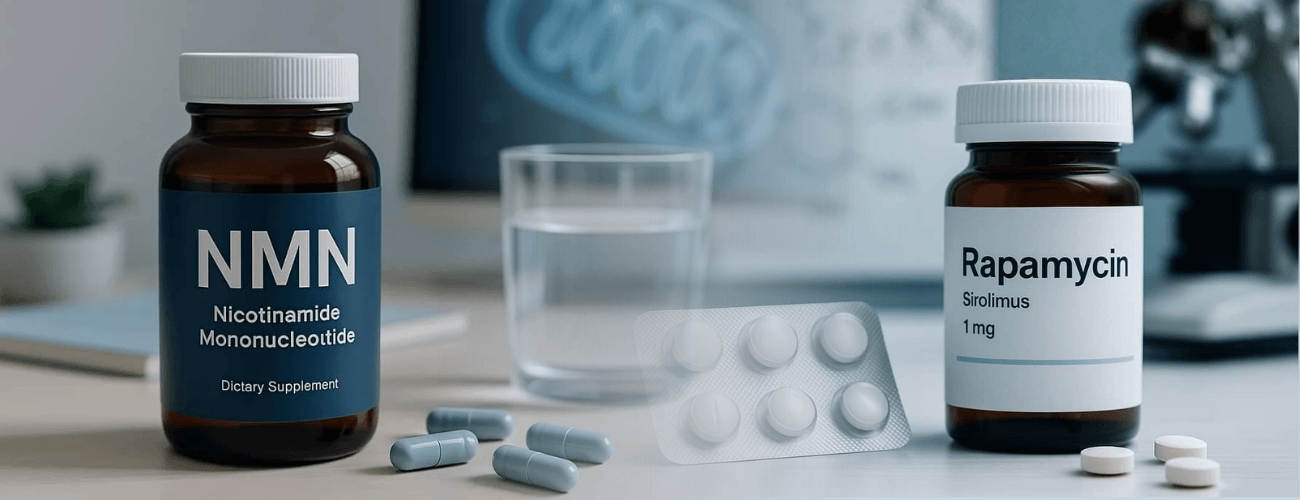
1. NMN Raises Interest, but Human Lifespan Evidence Is Not Proven
NMN stands for nicotinamide mononucleotide.
It is a precursor to NAD+, a molecule involved in cellular energy production, DNA repair processes, metabolic function, and other biological pathways.
NAD+ levels appear to decline with age in some tissues, which has led researchers to investigate whether raising NAD+ availability could support healthy ageing.
This is why NMN has become one of the most discussed longevity supplements.
Animal studies have suggested that boosting NAD+ pathways may influence metabolism, mitochondrial function, cellular stress responses, and ageing biology.
These findings have generated substantial interest.
However, human research remains early.
Some studies have examined markers related to insulin sensitivity, physical function, fatigue, and metabolic health.
Some findings are promising.
However, there is currently no strong evidence showing that NMN extends human lifespan.
The most responsible conclusion is that NMN is scientifically interesting, but still under investigation.
Consumers should be cautious about products that promise anti-ageing transformation, reversal of ageing, or guaranteed longevity benefits.
2. Rapamycin Is Scientifically Fascinating but Not a Proven Anti-Ageing Therapy
Among scientists, rapamycin is one of the most intriguing compounds in ageing research.
Rapamycin is a medication originally developed for medical uses including organ transplantation.
Researchers later discovered that it influences a biological pathway known as mTOR, or mechanistic Target of Rapamycin.
This pathway plays a major role in cell growth, protein synthesis, metabolism, nutrient sensing, immune function, and ageing-related biology.
In multiple animal studies, rapamycin has extended lifespan in several species.
These findings have generated intense interest in whether similar effects might occur in humans.
However, rapamycin is not a standard supplement.
It is a drug with potential side effects and medical uses.
At present, evidence supporting rapamycin for longevity in healthy humans remains limited.
Researchers continue to study potential benefits, safety considerations, dosing strategies, immune effects, metabolic effects, and long-term outcomes.
Rapamycin is not currently a proven anti-ageing therapy for the general population.
People should not use it casually or without qualified medical supervision.
3. Resveratrol Has Not Lived Up to Early Hype
Few longevity supplements have received as much public attention as resveratrol.
Resveratrol is a naturally occurring compound found in grapes, berries, peanuts, and red wine.
Interest increased after laboratory and animal studies suggested potential effects on cellular pathways related to ageing.
For years, resveratrol was promoted as one possible explanation for the supposed health benefits of red wine.
However, the human evidence has been far less dramatic than early headlines suggested.
Researchers continue to study resveratrol’s potential role in cardiovascular health, metabolic health, inflammation, and healthy ageing.
Current evidence does not support claims that resveratrol dramatically extends human lifespan.
This does not mean resveratrol is worthless.
It means the claims should match the evidence.
Eating polyphenol-rich foods such as berries, grapes, cocoa, tea, herbs, and colourful plant foods may support overall diet quality.
But taking resveratrol capsules should not be viewed as a proven shortcut to longevity.
For broader nutrition context, this article on Mediterranean diet evidence may be useful.
4. Omega-3s and Creatine Have Stronger Practical Health Relevance
Not all longevity supplements are experimental.
Some compounds discussed in healthy ageing have a stronger general health evidence base, even if they are not proven lifespan extenders.
Omega-3 fatty acids have been studied for cardiovascular health, inflammation, triglycerides, brain health, and healthy ageing.
They are not magic longevity pills, but they may be relevant for some people depending on diet, health status, and clinical needs.
Creatine is another example.
Although traditionally associated with athletic performance, creatine is increasingly being studied for muscle preservation, strength, physical function, cognitive performance under certain conditions, and healthy ageing.
The strongest evidence for creatine remains related to muscle and exercise performance.
This matters because maintaining muscle is central to healthy ageing.
Frailty, falls, weakness, and loss of mobility can strongly affect quality of life.
A supplement that supports strength training and muscle function may be more practically relevant to healthspan than a trendy compound with only early mechanistic evidence.
For more detail, see this article on creatine health benefits beyond athletic performance.
5. Animal Studies Are Useful but Do Not Guarantee Human Results
Much of the excitement surrounding longevity supplements comes from animal research.
Studies involving yeast, worms, flies, mice, and other models have provided valuable insights into ageing biology.
These studies help researchers identify pathways involved in lifespan, stress resistance, metabolism, cellular repair, senescence, and nutrient sensing.
However, translating findings from animals to humans is difficult.
Humans live much longer.
Human ageing is shaped by genetics, environment, lifestyle, disease, medication use, social factors, and decades of biological complexity.
Many interventions that appear promising in animal models do not produce the same effects in people.
This is why human clinical research is essential.
A supplement that extends lifespan in mice should not automatically be marketed as a proven human longevity intervention.
Animal data can justify further research.
It should not be treated as final proof.
6. Lifestyle Still Has the Strongest Evidence for Healthy Ageing
When researchers evaluate healthy ageing, the strongest evidence still supports established lifestyle practices.
These include regular physical activity, resistance training, nutritious dietary patterns, adequate protein intake, quality sleep, not smoking, limiting alcohol, stress management, social connection, vaccination where appropriate, and preventive healthcare.
These habits may not sound as exciting as NMN, rapamycin, or biological age testing.
However, they remain the foundation of healthspan.
Exercise supports cardiovascular health, insulin sensitivity, muscle mass, brain health, balance, and mood.
Sleep supports metabolism, immune function, cognition, and recovery.
Nutrition supports blood pressure, cholesterol, glucose regulation, inflammation, gut health, and body composition.
Social connection is linked with better mental and physical health outcomes.
Preventive healthcare can detect risk factors early.
In 2026, the most evidence-based approach to longevity is still built on daily habits, not any single pill.
For practical prevention support, this article on sleep deprivation and chronic disease may be helpful.
Why Longevity Research Is So Difficult
Studying ageing is uniquely challenging.
Human lifespans are long, which means proving that a supplement extends life may require decades of research.
Ageing is also complex.
It involves multiple interacting systems, including DNA repair, inflammation, mitochondrial function, cellular senescence, immune ageing, protein quality control, stem cell function, nutrient sensing, and metabolic regulation.
Another challenge involves biomarkers.
Researchers are developing tools to measure biological ageing, epigenetic age, inflammatory markers, metabolic health, and physical function.
However, biomarkers are not the same as hard clinical outcomes.
A supplement may improve a marker without proving that it prevents disease, preserves independence, or extends life.
This is why many longevity claims remain preliminary.
Biological Age Tests: Helpful or Hype?
Biological age testing has become popular alongside longevity supplements.
These tests may estimate ageing-related patterns based on DNA methylation, blood markers, or other biological signals.
They can be interesting, but they should be interpreted cautiously.
A biological age score is not the same as a diagnosis.
It is not a guarantee of lifespan.
It can vary by test type, laboratory method, algorithm, and short-term health factors.
Biological age testing may become more useful as science improves, but it should not be used to justify aggressive supplement stacks without clinical evidence.
People should be especially cautious when companies sell both the test and the product claimed to improve the result.
The Problem With Longevity Supplement Stacks
Many longevity enthusiasts take multiple supplements at once.
This is sometimes called a supplement stack.
The problem is that combining many compounds can create uncertainty.
Even if individual supplements appear safe, the combination may not be well studied.
Potential concerns include drug interactions, liver strain, kidney concerns, blood thinning effects, gastrointestinal side effects, nutrient excess, inaccurate dosing, and contamination risk.
More is not always better.
Higher doses do not necessarily produce greater benefits.
Supplements can also create a false sense of security.
Someone may focus on expensive capsules while neglecting sleep, exercise, nutrition, alcohol reduction, or preventive screening.
A careful approach is best.
Supplements should be targeted, evidence-informed, and discussed with a healthcare professional when medical conditions or medications are involved.
Who Should Be Especially Cautious?
Some people should be particularly cautious with longevity supplements.
This includes pregnant or breastfeeding individuals, people with cancer, people taking immunosuppressive drugs, people with kidney or liver disease, people using blood thinners, people with autoimmune conditions, older adults taking multiple medications, and anyone undergoing surgery or medical treatment.
Rapamycin-related interventions require special caution because rapamycin is a prescription medication with immune and metabolic effects.
People should not use prescription drugs for longevity without medical supervision.
Even common supplements can be inappropriate in some situations.
Personalised advice matters.
What About David Sinclair and Bryan Johnson?
Public figures have played a major role in popularising longevity science.
David Sinclair helped bring NAD+ pathways, sirtuins, resveratrol, and ageing biology into mainstream conversation.
Bryan Johnson has popularised intensive self-tracking, biomarkers, diet protocols, sleep routines, and supplement use through his longevity-focused lifestyle project.
These figures have increased public interest in healthspan, which can be positive.
However, personal protocols are not the same as medical guidelines.
A routine followed by a wealthy biohacker with extensive testing, medical oversight, and unusual resources may not be appropriate for the general public.
Longevity science should be evaluated through peer-reviewed evidence, safety data, and human outcomes rather than celebrity influence.
Common Myths About Longevity Supplements
Myth 1: A Single Supplement Can Dramatically Extend Life
No supplement has conclusively demonstrated dramatic lifespan extension in healthy humans.
Myth 2: Longevity Supplements Replace Healthy Habits
Lifestyle factors remain foundational to healthy ageing.
Supplements cannot replace movement, sleep, nutrition, social connection, and preventive care.
Myth 3: More Is Better
Higher doses do not necessarily produce greater benefits and may increase risk.
Myth 4: Animal Results Guarantee Human Results
Findings in laboratory studies do not always translate directly to people.
Myth 5: Natural Means Safe
Natural compounds can still cause side effects, interact with medications, or be harmful at high doses.
What the Evidence Currently Supports
Current evidence supports a cautious and practical approach.
NMN and NAD+ precursors are promising areas of research, but human lifespan evidence is not established.
Rapamycin has strong animal data and active scientific interest, but it is not a proven longevity therapy for healthy humans.
Resveratrol has not delivered the dramatic human anti-ageing results once suggested by headlines.
Omega-3s, creatine, vitamin D when deficient, and adequate protein may be more relevant to practical healthy ageing goals for some people, but they should still be used appropriately.
The strongest evidence for healthy ageing remains lifestyle-based.
Regular physical activity, strength training, high-quality nutrition, sleep, stress management, avoiding smoking, moderating alcohol, and preventive healthcare continue to matter most.
Looking Ahead
The science of longevity is advancing rapidly.
Researchers are learning more each year about the biological mechanisms that influence ageing and age-related disease.
NMN, rapamycin, resveratrol, spermidine, senolytics, metformin, and other compounds continue to generate excitement because they target pathways that appear relevant to healthy ageing.
However, enthusiasm should be balanced with caution.
As of 2026, most longevity supplements remain promising areas of research rather than proven solutions for extending human lifespan.
Future discoveries may eventually reshape ageing medicine.
Clinical trials may identify interventions that meaningfully improve healthspan.
Biomarkers may become more reliable.
Personalised prevention may become more sophisticated.
For now, the science suggests that healthy ageing still depends far more on daily habits than on any single supplement.
Conclusion
Longevity supplements are one of the most exciting and controversial areas of health science in 2026.
NMN, rapamycin, resveratrol, omega-3s, creatine, and other compounds all attract attention for different reasons.
Some target real biological pathways.
Some have promising animal data.
Some have practical health relevance.
However, the evidence does not yet support dramatic claims that supplements can reliably extend human lifespan.
The strongest longevity strategy remains familiar: stay physically active, build muscle, eat a nutritious diet, prioritise sleep, manage stress, maintain social connection, avoid smoking, limit alcohol, and follow evidence-based healthcare advice.
Supplements may eventually play a larger role in ageing medicine.
For now, they should be viewed as optional tools, not replacements for the foundations of healthy living.
Frequently Asked Questions
What is NMN?
NMN, or nicotinamide mononucleotide, is a compound involved in the production of NAD+, a molecule important for cellular energy metabolism and ageing research.
Does rapamycin extend lifespan in humans?
Rapamycin has extended lifespan in several animal models, but evidence for lifespan extension in healthy humans remains limited and under investigation.
Are longevity supplements proven to work?
Some longevity supplements show promising findings in laboratory or early human studies, but few have strong evidence demonstrating significant lifespan extension in humans.
What are the best-supported healthy ageing strategies?
Physical activity, resistance training, nutritious eating patterns, quality sleep, stress management, social connection, avoiding smoking, limiting alcohol, and preventive healthcare currently have the strongest support.
Should I take NMN or rapamycin for longevity?
Anyone considering NMN, rapamycin, or other longevity interventions should speak with a qualified healthcare professional. Rapamycin is a prescription medication and should not be used casually for anti-ageing.
References
https://www.nia.nih.gov/research/dab/interventions-testing-program-itp
https://www.nia.nih.gov/research/research-conducted-at-nia/biology-aging
https://www.nature.com/articles/s42255-025-01387-7
https://www.frontiersin.org/journals/aging/articles/10.3389/fragi.2025.1628187/full
https://www.thelancet.com/journals/lanhl/article/PIIS2666-7568(23)00258-1/fulltext
https://www.cell.com/cell-metabolism/home
https://www.nature.com/nataging