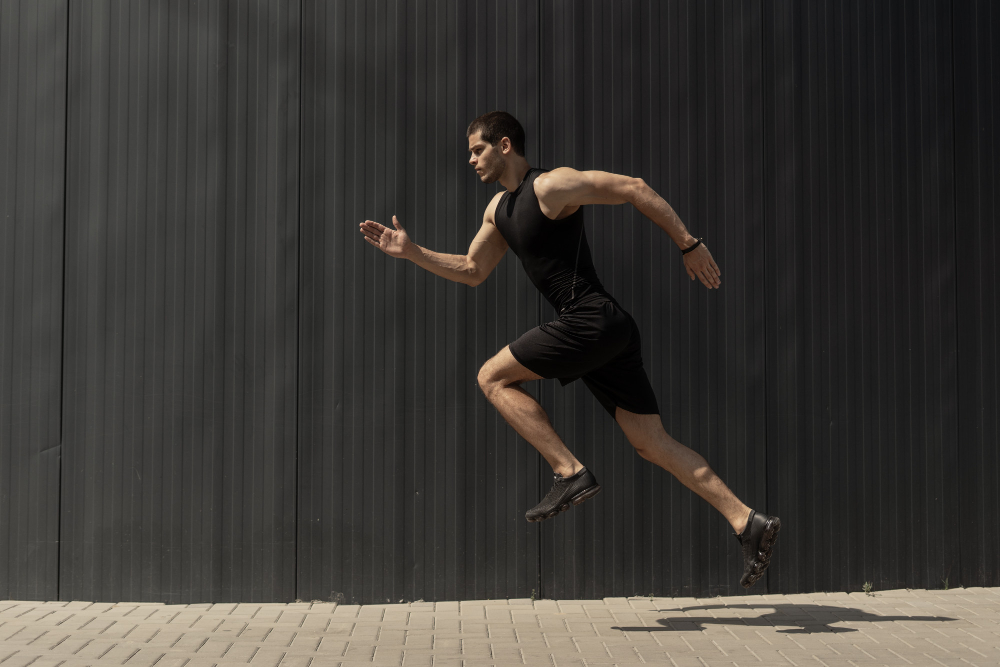

Running is one of the most widely practised forms of exercise in the world, but it also comes with a high rate of overuse injuries.
This makes running injury prevention a critical topic for both beginner and experienced runners.
Understanding how biomechanics influence movement can help reduce injury risk, improve efficiency, and support long-term performance.
Modern research shows that running injury prevention is not just about stretching or rest. It is also about how the body moves under repeated load.
From foot strike patterns to hip stability, each part of running biomechanics can influence whether a runner stays healthy or develops recurring pain.
In this guide, we explore evidence-informed principles behind running injury prevention, with a focus on biomechanics, training habits, strength, and practical strategies that promote injury-free running over the long term.
Why Running Injury Prevention Matters
The popularity of running continues to grow, but so does awareness of common running-related injuries.
Issues such as shin splints, patellofemoral pain, Achilles irritation, tendon overload, and calf strain can affect recreational and competitive runners.
This is why running injury prevention should be a structured part of every training plan.
Many runners focus mainly on speed, distance, or race goals. However, ignoring biomechanics and training load can increase injury risk over time.
Understanding how to prevent running injuries allows runners to train more consistently.
Consistency, not constant intensity, is often the real driver of endurance improvement.
For readers interested in building aerobic fitness sustainably, this guide on Zone 2 training benefits may be useful.
The Role of Running Biomechanics
At the core of running injury prevention is running biomechanics, which refers to how the body moves while running.
This includes stride length, cadence, foot strike, joint alignment, posture, and how force travels through the body.
Poor running biomechanics can increase load on the knees, hips, calves, ankles, and lower legs.
This is why coaches, physiotherapists, and sports professionals may use running form analysis to identify movement patterns that create excess stress.
Key biomechanical factors include foot strike position, hip stability, core engagement, cadence control, and stride mechanics.
Improving these elements may help support injury-free running and better long-term durability.
For a broader look at physical function, this guide on fitness testing at home may provide helpful context.
4 Smart Biomechanics Fixes for Running Injury Prevention
Small adjustments in movement and training habits can make a meaningful difference.
The goal is not to force every runner into one “perfect” form, but to identify patterns that may be increasing stress or reducing efficiency.
1. Improve Cadence and Avoid Overstriding
One common biomechanical issue is overstriding.
Overstriding happens when the foot lands too far in front of the body’s centre of mass.
This can increase braking forces and place extra stress on the knees, hips, shins, and calves.
A slightly higher cadence may help some runners land closer to the body and reduce excessive impact.
This does not mean every runner needs the same cadence target.
Instead, runners can gradually experiment with shorter, quicker steps while maintaining a relaxed posture.
This is one of the most practical running technique tips for reducing unnecessary impact.
2. Build Hip and Core Stability
Hip stability plays a major role in running injury prevention.
When the hips are weak or poorly controlled, the knees and lower legs may absorb more stress.
Weak glutes and poor pelvic control can contribute to inefficient movement patterns, especially during longer runs or fatigue.
Strengthening the glutes, hips, and core may improve alignment and help the body manage repetitive load more effectively.
Useful exercises may include bridges, side steps with a band, step-ups, split squats, dead bugs, and controlled single-leg movements.
For readers interested in strength work, this article on strength training after 50 explains why resistance exercise matters for long-term function.
3. Manage Training Load Gradually
Understanding how to prevent running injuries goes beyond technique.
Training load is one of the most important factors in running injury prevention.
Sudden increases in distance, speed, hill work, or weekly mileage can overload tissues before they have time to adapt.
A well-designed training plan should balance easy runs, harder sessions, recovery days, strength work, and gradual progression.
Many running injuries are not caused by one bad step. They often develop when repeated stress exceeds the body’s current capacity.
Structured running training plans help reduce that risk by allowing the body to adapt over time.
For runners with limited time, this guide on exercise snacking benefits may offer ideas for building movement consistency without overloading the body.
4. Use Running Form Analysis When Pain Persists
Running form analysis can be useful when injuries keep recurring or pain does not improve.
This process evaluates movement patterns to identify inefficiencies or high-stress mechanics.
A coach, physiotherapist, or sports professional may assess cadence, foot strike, hip position, trunk posture, stride length, and fatigue-related changes.
Running form analysis may reveal issues such as overstriding, excessive vertical bounce, poor pelvic control, or asymmetry between sides.
Correcting these patterns can improve running biomechanics and support running injury prevention over the long term.
However, form analysis should be interpreted carefully. Pain and injury are usually influenced by multiple factors, including load, recovery, strength, sleep, footwear, terrain, and training history.
Common Running Injuries and Biomechanical Causes
Many running injuries are influenced by mechanics, workload, recovery, or strength deficits.
Shin splints may be associated with rapid training increases, impact load, footwear changes, or lower-leg capacity.
Patellofemoral pain may be influenced by hip control, knee tracking, training volume, or repeated downhill running.
Calf strain during running may occur when the calf muscles are overloaded, fatigued, or exposed to sudden changes in speed or terrain.
Achilles irritation can also be linked to training spikes, hill work, footwear changes, or inadequate calf strength.
Understanding the likely cause is essential for effective running injury prevention.
For readers dealing with lower-leg discomfort, this article on leg muscle pain and spinal mobility may provide useful background.
Running Technique Tips That May Reduce Injury Risk
Good running technique is not about looking perfect.
It is about moving efficiently and reducing unnecessary stress.
Helpful running technique tips may include keeping the upper body relaxed, avoiding excessive overstriding, maintaining a steady cadence, landing with the foot closer to the body, and keeping the head and torso tall.
Runners should also avoid making dramatic form changes too quickly.
Sudden changes in stride, footwear, cadence, or foot strike can create new stress on tissues.
Small, gradual adjustments are usually safer than major technique changes.
This is another important principle of running injury prevention.
Strength Training and Injury-Free Running
Although running is repetitive, strength training plays an important role in long-term durability.
Strong muscles absorb impact more efficiently and support better joint control.
The calves, glutes, hamstrings, quadriceps, hips, and core are especially important for runners.
Strength work may improve stability, power, balance, and fatigue resistance.
When strength training is combined with running technique tips and sensible training progression, runners may experience fewer setbacks and improved efficiency.
For older runners or those returning to activity, this guide on healthy ageing and longevity practices may be helpful.
Running Training Plans and Load Management
Structured running training plans are essential for sustainable performance and running injury prevention.
A good plan balances easy runs, speed work, longer aerobic sessions, recovery, mobility, and strength training.
Without structure, runners may overload tissues by increasing mileage or intensity too quickly.
Many recreational runners make the mistake of running every session too hard.
Easy runs have value because they build aerobic capacity while allowing recovery.
For runners interested in cardiovascular development, this article on VO2 max explained may provide useful context.
The Role of Recovery
Recovery is often overlooked in running injury prevention.
The body adapts between training sessions, not only during them.
Sleep, nutrition, hydration, rest days, and lower-intensity sessions all help tissues recover and become stronger.
A runner who ignores recovery may feel fine for a while, but accumulated fatigue can eventually affect form and increase injury risk.
Pain that changes running mechanics, worsens over time, or persists despite rest should be assessed by a qualified healthcare professional.
Local Running Groups and Community Support
Consistency is a major factor in injury-free running, and community support can help runners stay on track.
Joining local running groups may provide structure, accountability, and shared learning opportunities.
Many groups also help beginners understand pacing, warm-ups, progression, and recovery.
Group training can be motivating, but runners should still listen to their own body.
Not every group pace or workout is appropriate for every individual.
The best running community encourages progress without pressuring people into unsafe training loads.
Building Long-Term Injury-Free Running Habits
Achieving injury-free running requires consistency, awareness, and adaptation.
It is not about avoiding all stress. Running itself is a form of stress that helps the body adapt.
The key is managing that stress intelligently.
Useful habits include following structured running training plans, applying sensible running technique tips, monitoring running biomechanics, building strength, and avoiding sudden training spikes.
Runners who prioritise running injury prevention tend to have longer, more sustainable running journeys.
Conclusion
Running is one of the most accessible and effective forms of exercise, but it carries a higher risk of injury when biomechanics and training load are ignored.
Prioritising running injury prevention helps support long-term consistency, confidence, and performance.
By understanding running biomechanics, using running form analysis when needed, and applying practical running technique tips, runners can reduce injury risk and build more resilient movement patterns.
Whether someone is following structured running training plans or participating in local running groups, the goal remains the same: sustainable, injury-free running.
Ultimately, learning how to prevent running injuries is part of becoming a stronger, smarter, and more durable runner for years to come.
Frequently Asked Questions
What is the most important factor in running injury prevention?
The most important factor in running injury prevention is managing training load alongside efficient running biomechanics. Gradual progression, recovery, strength, and movement quality all matter.
How does running biomechanics affect injury risk?
Running biomechanics influence how forces are distributed through the body during each stride. Patterns such as overstriding, poor hip control, or excessive impact may increase stress on joints and tissues.
Can running form analysis really prevent injuries?
Running form analysis can help identify inefficient or high-stress movement patterns. It may be useful for runners with recurring pain, but it should be combined with load management, strength training, and recovery.
How do running training plans help prevent injuries?
Running training plans help control workload progression. They usually include easy runs, harder sessions, rest, strength work, and gradual mileage increases to reduce overload risk.
Are strength exercises necessary for injury-free running?
Strength exercises are highly useful for many runners. Stronger hips, calves, core, and legs can help absorb impact, support better biomechanics, and reduce strain during repetitive running.
References
https://www.mayoclinic.org/diseases-conditions/shin-splints/symptoms-causes/syc-20354105
https://pubmed.ncbi.nlm.nih.gov/?term=hip+abductor+strength+running+injury+systematic+review