Walking has long been recognised as one of the most accessible forms of physical activity.
It requires no gym membership, can be adapted to different fitness levels, and is associated with a wide range of physical and mental health benefits.
But what happens when you add a pair of specially designed poles and engage your entire body while walking?
This is the principle behind Nordic walking, a form of exercise that originated in Finland and has grown in popularity around the world. Once primarily associated with cross-country ski training, Nordic walking is now used by recreational exercisers, older adults, fitness enthusiasts, and, in some settings, as part of supervised rehabilitation and physical activity programs.
While it may appear simple, Nordic walking involves more than just walking with poles. Research suggests it can increase muscle engagement, raise cardiovascular demand, and support functional movement while remaining relatively low impact.
For people looking for a sustainable and enjoyable way to stay active, Nordic walking offers an interesting alternative to traditional walking.
At The Health Academy, we provide trusted, evidence-based health information to help readers better understand medical conditions, wellness trends, and healthy lifestyle choices.
What Is Nordic Walking?
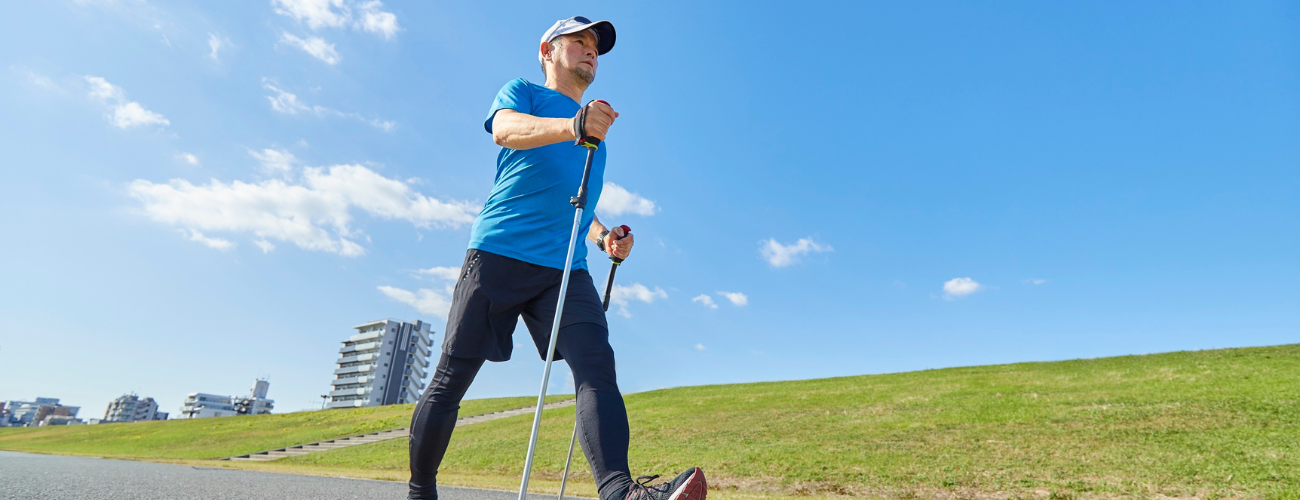
Nordic walking is a walking technique that incorporates specially designed poles to engage the upper body while moving.
Unlike trekking poles used for hiking, Nordic walking poles are intended to work in coordination with natural walking movements.
The technique involves:
- Planting the poles in rhythm with each step
- Actively pushing through the poles
- Engaging the arms, shoulders, chest, and back
- Maintaining an upright posture
The result is a movement pattern that involves both the upper and lower body.
Why Is Nordic Walking Becoming More Popular?
One reason Nordic walking continues to gain popularity is its accessibility.
Many people appreciate that it can be adapted for:
- Beginners
- Older adults
- Recreational walkers
- Active individuals
- People seeking low-impact exercise options
It combines familiar walking movements with additional upper-body involvement, making it approachable for a wide range of fitness levels.
The Science Behind Walking for Fitness
At first glance, Walking for Fitness may not seem dramatically different from regular walking.
However, the addition of poles changes how the body moves and distributes effort.
Research has shown that Low Impact Exercise may:
- Increase overall muscle involvement
- Raise heart rate compared with normal walking
- Increase energy expenditure
- Promote upright posture
- Encourage coordinated movement patterns
These effects help explain why many exercise professionals view Nordic walking as a full-body activity rather than simply a walking variation.
A Full-Body Walking Workout
Traditional walking primarily relies on the lower body.
Full Body Workout incorporates additional muscle groups including:
- Shoulders
- Upper arms
- Chest
- Upper back
- Core muscles
Because more muscles contribute to movement, the body may work harder while maintaining a relatively comfortable level of perceived effort.
This combination of aerobic activity and muscular engagement is one reason Walking for Fitness has attracted attention from researchers and movement specialists.
Nordic Walking and Cardiovascular Health
Walking is already widely recognised as a beneficial form of cardiovascular exercise.
The additional upper-body involvement during Nordic walking may increase cardiovascular demand compared with standard walking at the same pace.
Researchers continue to investigate how Nordic walking may support physical fitness and cardiovascular health when incorporated into broader exercise programs.
However, it should not be viewed as a replacement for personalised medical advice or treatment.
Individuals with existing cardiovascular conditions should consult their healthcare provider before starting a new exercise routine.
Why Walking for Fitness Is Considered Low Impact
Many people are searching for exercise options that are effective while being gentle on the body.
Walking for Fitness is often described as a low-impact activity because it avoids the repetitive high-impact forces associated with activities such as running.
The use of poles may also help distribute workload across the body and improve movement confidence for some individuals.
This can make it an appealing option for people seeking alternatives to higher-impact forms of exercise.
Nordic Walking for Older Adults
One of the most frequently searched topics is Nordic walking for elderly individuals.
As people age, maintaining physical activity becomes increasingly important for:
- Mobility
- Balance
- Strength
- Independence
- Cardiovascular health
The combination of walking and pole use may help support confidence during movement while encouraging participation in regular physical activity.
Importantly, exercise recommendations should always be tailored to individual health status and mobility needs.
Nordic Walking and Active Ageing
Active ageing focuses on maintaining physical, social, and functional wellbeing throughout life.
Walking for Fitness aligns with several principles of active ageing because it:
- Encourages regular movement
- Supports cardiovascular fitness
- Involves multiple muscle groups
- Can be adapted to different ability levels
- Can be performed outdoors
For many adults, the goal is not athletic performance but maintaining mobility and independence over time.
Can Walking for Fitness Help With Weight Management?
Weight loss is one of the most commonly searched topics related to Walking for Fitness.
Like many forms of physical activity, Walking for Fitness may contribute to energy expenditure as part of a broader healthy lifestyle.
However, no single exercise guarantees weight loss.
Body weight is influenced by multiple factors including:
- Nutrition
- Sleep
- Physical activity
- Stress
- Medical conditions
- Genetics
Walking for Fitness should be viewed as one potential component of a comprehensive approach to health and wellbeing.
Walking for Fitness for Beginners
One reason Walking for Fitness appeals to beginners is that the movement pattern can often be learned progressively.
Many beginners start by focusing on:
- Comfortable walking posture
- Coordinating arm and leg movements
- Proper pole placement
- Gradually increasing pace and duration
Learning correct technique may help maximise comfort and effectiveness.
Basic Walking for Fitness Technique
While technique can vary, key principles often include:
- Standing upright
- Looking forward rather than down
- Swinging the arms naturally
- Planting poles in rhythm with walking
- Pushing through the poles rather than simply carrying them
Many people benefit from instruction when first learning the technique.
Advantages of Walking for Fitness
Potential advantages may include:
- Full-body movement
- Low-impact exercise
- Outdoor activity opportunities
- Increased cardiovascular demand compared with normal walking
- Adaptability for different fitness levels
- Support for active ageing goals
Individual experiences will vary.
Are There Any Disadvantages?
As with any activity, Walking for Fitness may not suit everyone.
Potential challenges include:
- Learning proper technique
- Purchasing appropriate poles
- Adapting to coordinated arm and leg movements
- Limited access to instruction in some areas
These factors do not necessarily prevent participation but may influence how easily someone gets started.
Is Nordic Walking Better Than Regular Walking?
A common question is whether Nordic walking is “better” than traditional walking.
The answer depends on individual goals.
For some people, Walking for Fitness may provide:
- Greater upper-body involvement
- Higher aerobic demand
- Increased movement variety
For others, regular walking may be simpler and equally sustainable.
The best exercise is often the one a person enjoys and can maintain consistently.
Looking Ahead
As awareness of active ageing, mobility, and long-term health continues to grow, Walking for Fitness is attracting increasing interest worldwide.
Its combination of cardiovascular activity, upper-body engagement, and accessibility makes it a unique option within the broader landscape of physical activity.
While it is not a miracle exercise, Walking for Fitness demonstrates how a simple modification to a familiar activity can create a more comprehensive movement experience.
For many people, that may be exactly what makes it worth exploring.
FAQ’S
What are the benefits of Nordic walking?
Nordic walking may support cardiovascular fitness, full-body movement, physical activity participation, and active ageing when incorporated into a broader healthy lifestyle.
Do I need special poles for Nordic walking?
Yes. Walking for Fitness typically uses specially designed poles that differ from standard hiking or trekking poles.
Is Nordic walking suitable for older adults?
Many older adults participate in Walking for Fitness because it is low impact and adaptable. Exercise suitability varies between individuals.
Can Nordic walking help with weight loss?
Like other forms of physical activity, Walking for Fitness may contribute to energy expenditure as part of a balanced lifestyle. No exercise alone guarantees weight loss.