
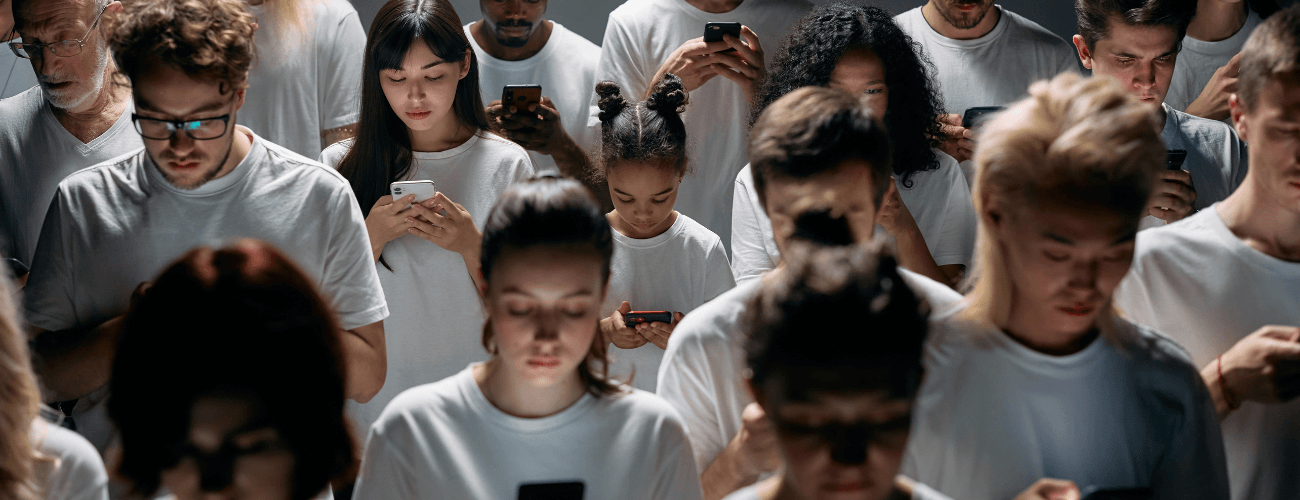
Social platforms have transformed how teenagers communicate, learn, express themselves, and build relationships.
However, growing global concern around mental health and social media has pushed researchers, parents, educators, and policymakers to investigate how constant digital exposure affects emotional wellbeing.
Today, discussions about mental health and social media are among the most important public health conversations worldwide.
Recent research suggests that mental health and social media are connected through patterns of screen time, online comparison, cyberbullying, sleep disruption, and reward-based engagement systems.
Social media can offer opportunities for connection, creativity, identity exploration, and access to support.
At the same time, excessive or unhealthy use may contribute to anxiety, loneliness, low self-esteem, and mood problems, especially among vulnerable teenagers.
Understanding the relationship between mental health and social media is critical for families, schools, healthcare professionals, and young people trying to build healthier digital habits.
Why Mental Health and Social Media Are Global Concerns
Over the last decade, researchers have increasingly focused on mental health and social media because rates of anxiety, depression, sleep problems, and emotional distress have become major concerns among adolescents.
The issue became even more significant during the pandemic, when online interaction replaced many forms of face-to-face communication.
Studies exploring social media mental health patterns suggest that adolescents who spend long periods online may be more likely to report lower self-esteem, emotional distress, and sleep disruption.
Researchers are particularly concerned about how algorithm-driven content can reinforce comparison, fear of missing out, body image concerns, and emotionally intense content loops.
The debate intensified further as public health organisations began examining the impact of smartphone use, cyberbullying, sleep deprivation, and platform design on young people’s wellbeing.
For broader context on post-pandemic wellbeing, this article on global mental health after COVID may be useful.
6 Research Findings on Mental Health and Social Media
The evidence is complex.
Social media is not automatically harmful, and not every teenager is affected in the same way.
However, the latest research highlights several important patterns.
1. Screen Time Alone Does Not Tell the Whole Story
One of the biggest mistakes in the mental health and social media debate is focusing only on the number of hours spent online.
Time matters, but quality of use matters too.
A teenager who spends one hour being cyberbullied may be more affected than another teenager who spends two hours messaging supportive friends, learning a skill, or joining a positive community.
Researchers increasingly look at how social media is used, not just how long it is used.
Important factors include whether the young person is actively connecting or passively scrolling, whether content is supportive or harmful, and whether online use replaces sleep, exercise, schoolwork, or offline friendships.
This is why balanced digital habits are more realistic than simple “good” or “bad” labels.
2. Social Comparison Can Affect Self-Esteem
One of the most researched effects of social media on mental health is comparison culture.
Teenagers are exposed to carefully edited images, filtered faces, idealised lifestyles, fitness content, popularity metrics, and influencer marketing.
During adolescence, identity and self-worth are still developing.
Constant comparison can make young people feel that they are not attractive enough, successful enough, popular enough, or happy enough.
This can contribute to body dissatisfaction, anxiety, low mood, and reduced self-esteem.
The impact of social media on mental health may be stronger when young people believe online content reflects real life rather than curated presentation.
Digital literacy can help teenagers recognise editing, algorithms, advertising, and unrealistic content.
For related discussion on social connection and self-worth, this article on the loneliness epidemic may provide helpful context.
3. Cyberbullying Can Intensify Emotional Distress
Cyberbullying is one of the clearest risks in the mental health and social media conversation.
Unlike traditional bullying, online bullying can follow a young person home, continue at night, spread quickly, and feel impossible to escape.
Harmful comments, exclusion, rumours, image sharing, harassment, and public humiliation can have serious emotional consequences.
Cyberbullying has been linked with anxiety, depression, loneliness, school avoidance, sleep problems, and suicidal thoughts in vulnerable young people.
This is why parents, schools, and platforms need clear systems for reporting, blocking, documenting, and responding to online harm.
Teenagers should know they can ask for help without fear of punishment or losing all digital access.
A supportive response is usually more effective than blame or panic.
4. Sleep Disruption Is a Major Pathway
Sleep disruption is one of the most consistent findings in research on mental health and social media.
Teenagers often use phones late at night for messaging, videos, gaming, scrolling, or checking notifications.
This can delay bedtime, reduce sleep duration, and make it harder to wind down.
Emotional content can also keep the brain alert.
Poor sleep affects mood, concentration, memory, emotional regulation, appetite, and stress resilience.
Over time, sleep loss may increase vulnerability to anxiety and depression.
Reducing screen exposure before bed is one of the simplest and most practical steps families can take.
Helpful strategies include charging phones outside the bedroom, setting a digital curfew, turning off notifications, and creating a calming bedtime routine.
For broader lifestyle support, this guide on healthy lifestyle habits for mind, body and soul may be useful.
5. Reward Systems Can Encourage Compulsive Use
Social media platforms are designed to keep users engaged.
Likes, comments, shares, streaks, notifications, and personalised feeds can activate reward systems in the brain.
This does not mean every young person becomes addicted.
However, some teenagers may develop compulsive use patterns, especially when social media becomes their main source of validation, distraction, or emotional relief.
A young person may check their phone repeatedly to see whether someone replied, liked a post, or viewed a story.
When engagement drops, they may feel rejected or anxious.
This emotional dependency is one reason mental health and social media research now focuses on platform design, notifications, algorithms, and persuasive technology.
Healthy use often requires intentional boundaries rather than relying on willpower alone.
6. Social Media Can Also Provide Support
The relationship between mental health and social media is not entirely negative.
For some young people, online spaces provide connection, creativity, education, and emotional support.
Social media can help teenagers find communities related to hobbies, identity, chronic illness, disability, mental health awareness, or shared interests.
It can also encourage help-seeking when young people see others talk openly about therapy, anxiety, depression, or coping strategies.
Positive online communities may reduce isolation, especially for teenagers who feel misunderstood offline.
The key is whether the online environment is supportive, safe, age-appropriate, and balanced with offline life.
For readers interested in digital support communities, this article on online support groups for chronic illness may be useful.
Social Media and Depression in Teenagers
One of the strongest concerns associated with mental health and social media is the link between heavy social media use and depressive symptoms.
Research into social media and depression suggests that teenagers who spend excessive time online may be more likely to report sadness, loneliness, emotional exhaustion, and low self-worth.
This does not mean social media directly causes depression in every case.
Mental health is shaped by many factors, including genetics, family support, trauma, sleep, physical activity, school stress, bullying, identity, and access to care.
However, social media may contribute to risk when it increases comparison, disrupts sleep, exposes young people to bullying, or replaces supportive offline relationships.
Balanced use and early support are important.
Social Media and Mental Health Statistics
Social media and mental health statistics show that digital platform use is now a major part of adolescent life.
Many teenagers use social media daily, and some use it several times per day.
Public health organisations are increasingly tracking frequent use, bullying exposure, sleep problems, sadness, hopelessness, and suicide risk to better understand the scale of the issue.
Statistics also suggest that different groups may experience different risks.
Girls may be more affected by appearance comparison and social evaluation.
Boys may experience risks through gaming communities, online aggression, or different forms of social pressure.
Young people who already experience loneliness, bullying, discrimination, disability, chronic illness, or mental health concerns may be more vulnerable to harmful online experiences.
These patterns show why social media and mental health statistics should be used carefully.
Numbers help identify risk, but individual context still matters.
Why Teenagers Are Especially Vulnerable
Teenagers are particularly sensitive to mental health and social media because the adolescent brain is still developing.
Emotional regulation, impulse control, reward sensitivity, and identity formation are all changing during these years.
Peer approval also becomes especially important.
This makes teenagers more vulnerable to likes, comments, exclusion, online popularity, and emotionally charged content.
The rapid pace of digital communication can leave little time for emotional recovery.
A conflict that once ended at school can now continue through messages, screenshots, group chats, and public posts.
This constant exposure can make adolescence more socially intense than it used to be.
What Parents Can Do
Parents can support healthier social media use without relying only on punishment or strict bans.
Open communication is one of the most important tools.
Teenagers are more likely to talk about harmful content, cyberbullying, or emotional distress if they believe adults will listen calmly.
Helpful steps include setting family screen routines, keeping devices out of bedrooms at night, discussing online comparison, encouraging offline friendships, and modelling healthy phone use.
Parents can also ask what their teenager enjoys online.
This helps shift the conversation from control to curiosity.
If a young person’s mood, sleep, schoolwork, appetite, friendships, or self-esteem changes significantly, it may be time to seek professional support.
For broader family wellbeing context, this guide on daily rituals and tiny health benefits may be helpful.
What Schools Can Do
Schools play an important role in digital wellbeing.
Education about the impact of social media on mental health can be included in wellbeing programs, health classes, and digital literacy lessons.
Students need to understand algorithms, privacy, cyberbullying, misinformation, body image pressure, and the difference between online performance and real life.
Schools can also create clear cyberbullying policies and help students report harm safely.
Peer support programs, counselling access, mental health education, and phone-free learning periods may also help.
The goal is not to shame technology use.
The goal is to teach young people how to use digital tools safely and intentionally.
What Healthcare Professionals Can Do
Healthcare professionals are increasingly asking young people about screen time, sleep, cyberbullying, mood, and social media habits during mental health assessments.
This is important because digital behaviour may influence anxiety, depression, self-esteem, sleep, and social functioning.
Clinicians can help families identify whether social media is a protective factor, a risk factor, or both.
For example, one young person may use online communities for genuine support, while another may be trapped in comparison, bullying, or compulsive scrolling.
Personalised guidance is more useful than blanket advice.
For broader discussion of healthcare and digital change, this article on telehealth trends after the pandemic may provide useful context.
The Future of Mental Health and Social Media Research
Research into mental health and social media continues to evolve quickly.
Scientists are now studying algorithms, short-form video, personalised recommendation systems, digital addiction patterns, AI-driven feeds, and long-term developmental outcomes.
Governments and health organisations are also considering policies designed to protect younger users from harmful content, excessive engagement systems, privacy risks, and online exploitation.
Future research will likely focus less on whether social media is simply good or bad.
Instead, it will ask which platforms, features, habits, age groups, and usage patterns carry the most risk or benefit.
This more nuanced approach will help families, schools, clinicians, and policymakers create safer digital environments.
Healthy Digital Habits for Teenagers
The healthiest approach is usually balance, not total avoidance.
Practical habits include turning off non-essential notifications, avoiding phones before bed, unfollowing harmful accounts, taking regular screen breaks, protecting privacy, reporting cyberbullying, and scheduling offline activities.
Teenagers can also ask themselves useful questions:
Does this platform make me feel connected or drained?
Am I comparing myself to unrealistic content?
Is social media affecting my sleep?
Do I feel anxious when I cannot check my phone?
Am I using social media to avoid difficult emotions?
These questions can help young people become more aware of their digital patterns.
Conclusion
The connection between mental health and social media is complex, multifaceted, and increasingly important in modern society.
Social media can support connection, creativity, education, and help-seeking.
However, research also highlights concerns around anxiety, depression, sleep disruption, cyberbullying, self-esteem, and compulsive use.
Understanding mental health and social media is not about rejecting technology entirely.
It is about creating healthier relationships with digital platforms while supporting emotional resilience in young people.
Families, schools, healthcare professionals, and technology companies all have a role to play.
The goal is not a world without social media.
The goal is a safer digital world where young people can connect, learn, and express themselves without sacrificing their wellbeing.
Frequently Asked Questions
Does social media directly cause mental health problems?
Social media alone does not directly cause all mental health conditions. However, excessive or unhealthy use may contribute to anxiety, stress, low self-esteem, sleep disruption, and depression in vulnerable individuals.
What are the main effects of social media on mental health?
The main effects of social media on mental health may include anxiety, sleep disruption, comparison-related stress, emotional dependency on validation, cyberbullying exposure, and reduced concentration.
Why are teenagers more affected by social media?
Teenagers are more vulnerable because their brains are still developing emotionally and socially. Peer approval, identity formation, impulse control, and emotional regulation are especially sensitive during adolescence.
Can social media have positive mental health benefits?
Yes. Positive online communities, educational content, emotional support groups, and creative expression can improve connection and reduce feelings of isolation when used responsibly.
How can parents help teenagers use social media more safely?
Parents can encourage balanced screen time, open communication, healthy sleep habits, digital literacy, privacy awareness, and regular offline activities.
References
https://www.who.int/europe/news/item/25-09-2024-teens–screens-and-mental-health
https://www.cdc.gov/mmwr/volumes/73/su/su7304a3.htm
https://www.apa.org/topics/social-media-internet/health-advisory-adolescent-social-media-use