
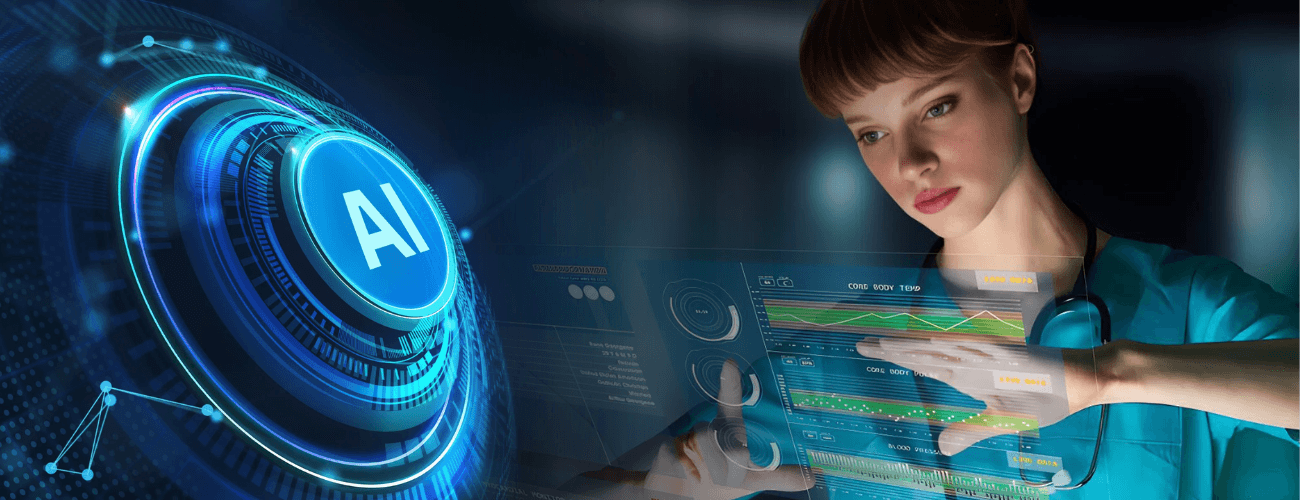
Artificial intelligence is rapidly transforming modern medicine, and nowhere is this more visible than in the rise of AI healthcare careers.
From diagnostics to hospital management systems, AI is reshaping how healthcare professionals work, make decisions, and deliver patient care.
As a result, demand for AI healthcare careers is accelerating across hospitals, research institutions, health technology companies, and the broader healthcare ecosystem.
The evolution of AI healthcare careers is not simply about automation replacing jobs. It is also about creating new professional pathways.
These include advanced analytical roles, hybrid clinical-technology positions, and entirely new categories of healthcare innovation jobs.
Today, professionals exploring AI healthcare careers are finding opportunities that did not exist a decade ago.
This transformation is especially visible in radiology, pathology, general practice, nursing, health administration, and digital health, where AI systems are increasingly supporting diagnosis, workflow optimisation, and predictive analytics.
The Rise of AI in Modern Healthcare Systems
The expansion of AI in healthcare is one of the most significant developments in modern medicine.
Hospitals and health organisations are now exploring machine learning algorithms to assist with imaging analysis, patient risk prediction, administrative workflows, and treatment planning.
Within the growing AI healthcare industry, demand for AI jobs in healthcare is increasing rapidly.
These roles include data scientists, clinical technologists, health informatics specialists, AI systems developers, and digital health product leaders.
As hospitals adopt AI-driven tools, professionals are needed to ensure systems are accurate, ethical, clinically relevant, and safe for patient care.
This shift is also influencing recruitment trends across global health systems, including Australia, where digital health jobs are expanding as healthcare becomes more data-driven.
For broader context on technology in chronic care, this article on AI in healthcare and chronic disease safety may be useful.
Why AI Healthcare Careers Are Growing So Fast
The growth of AI healthcare careers is being driven by three major forces: data growth, workforce pressure, and technological advancement.
Healthcare systems now generate massive volumes of patient data from electronic health records, imaging systems, wearable devices, pathology results, telehealth platforms, and hospital operations.
This creates demand for professionals skilled in health informatics jobs who can interpret data and apply insights responsibly.
At the same time, many healthcare systems are under pressure from workforce shortages, ageing populations, and rising chronic disease.
AI tools are being explored as one way to support efficiency, reduce administrative burden, and help clinicians focus on patient care.
Another major factor is the increasing integration of AI into clinical workflows.
This has created demand for professionals in digital health careers who can bridge medicine, technology, data science, and regulation.
5 Emerging AI Healthcare Careers
One of the most exciting aspects of AI healthcare careers is the emergence of new job roles that combine clinical knowledge with digital expertise.
These roles are not all purely technical. Many require communication, healthcare literacy, ethical judgement, and the ability to work across multidisciplinary teams.
1. Clinical AI Specialist
A clinical AI specialist works directly with healthcare providers to implement AI systems in clinical environments.
These professionals help ensure that AI tools are safe, effective, practical, and aligned with medical standards.
Their work may involve supporting diagnostic imaging tools, patient monitoring systems, clinical decision support platforms, or AI-assisted workflow systems.
The demand for clinical AI specialists is increasing as hospitals integrate AI into diagnostic and operational settings.
This role is especially important because AI tools must be understood in real clinical context, not only as software products.
2. Health Informatics Specialist
A health informatics specialist focuses on managing, analysing, and applying healthcare data to improve patient outcomes and system performance.
This role sits at the intersection of medicine, IT, data science, and healthcare operations.
With the rise of electronic health records, predictive analytics, digital patient portals, and connected devices, health informatics has become central to modern healthcare systems.
Health informatics specialists may help improve data quality, support clinical reporting, analyse patient trends, and guide digital transformation projects.
This is one of the most important AI healthcare careers for people who want to combine healthcare knowledge with data-driven decision-making.
3. Digital Health Product Manager
A digital health product manager is responsible for designing, managing, and improving healthcare technology platforms.
This may include patient apps, clinician dashboards, telehealth tools, AI-supported triage platforms, or remote monitoring systems.
A digital health product manager ensures that technology is user-friendly, clinically useful, compliant with healthcare regulations, and aligned with patient needs.
This role requires an understanding of healthcare workflows, product strategy, user experience, data privacy, and stakeholder communication.
As healthcare systems digitise, demand for digital health product manager roles is expected to continue growing.
For readers interested in connected health tools, this guide on wearable medical devices in clinical practice may provide helpful background.
4. Healthcare Machine Learning Specialist
Healthcare machine learning jobs focus on building, testing, and improving models that can support clinical and operational decisions.
These professionals may work on systems that predict patient risk, analyse medical images, identify patterns in large datasets, or optimise treatment pathways.
People in healthcare machine learning jobs often work alongside clinicians, data engineers, researchers, and compliance teams.
Their goal is not simply to build accurate models, but to ensure AI systems are clinically useful, explainable, fair, and safe.
As the AI healthcare industry grows, healthcare machine learning jobs are becoming some of the most competitive and high-value roles in the sector.
5. AI Ethics and Governance Lead
As AI becomes more common in healthcare, ethical oversight is becoming essential.
An AI ethics and governance lead helps organisations manage questions related to bias, transparency, privacy, accountability, consent, and patient safety.
This role may involve reviewing AI tools before deployment, developing governance frameworks, monitoring outcomes, and ensuring systems comply with relevant standards.
Healthcare AI must be carefully governed because errors or biased models can affect diagnosis, treatment, and access to care.
For this reason, AI ethics is likely to become one of the most important future pathways within AI healthcare careers.
Digital Transformation in Healthcare Careers
The expansion of digital health careers is one of the strongest indicators of how AI is reshaping medicine.
These roles combine clinical understanding with technical expertise to improve healthcare delivery systems.
In Australia and many other countries, digital health careers are growing because of investment in telehealth, electronic medical records, health data systems, and AI-supported platforms.
The growth of digital health jobs reflects a broader shift toward technology-enabled healthcare that relies on data-driven decision-making.
For healthcare workers, this means future career development may increasingly involve digital literacy, systems thinking, and collaboration with technical teams.
AI in Clinical Practice: From Radiology to General Medicine
The impact of AI healthcare careers is especially visible in clinical disciplines.
Radiology, pathology, cardiology, general practice, and hospital medicine are all being influenced by AI-powered tools.
Doctors are increasingly supported by systems that may enhance image review, identify risk patterns, summarise patient information, or support clinical documentation.
This is driving new opportunities in clinical AI jobs, where professionals design, implement, manage, and evaluate AI tools used in medical settings.
The rise of clinical AI jobs is particularly important in diagnostic medicine, where machine learning algorithms are being studied for disease detection and workflow support.
However, AI should be viewed as a support tool rather than a replacement for qualified healthcare professionals.
Clinical judgement, patient context, empathy, and ethical decision-making remain essential.
Digital Health Jobs in Australia
Australia is emerging as a growing market for healthcare technology and digital health innovation.
Demand for digital health jobs in Australia is rising due to investment in telehealth, electronic medical records, health data platforms, remote monitoring, and AI-supported healthcare systems.
Hospitals, startups, research organisations, and government-linked health programs are increasingly hiring professionals with skills in data, product development, informatics, and clinical system integration.
AI jobs in healthcare may be especially relevant in major cities such as Sydney, Melbourne, Brisbane, and other centres where healthcare innovation and technology companies are expanding.
However, rural and remote healthcare may also benefit from digital health systems that support access, triage, and remote care.
For wider discussion of healthcare workforce challenges, this article on the global nursing shortage may be relevant.
How AI Is Changing Traditional Medical Careers
The rise of AI healthcare careers does not mean the replacement of doctors, nurses, allied health professionals, or administrators.
Instead, AI is changing how many healthcare professionals work.
Radiologists may use AI tools to support image interpretation.
Pathologists may use digital systems to assist with pattern recognition.
General practitioners may use AI-supported systems to help manage patient records, risk alerts, and care planning.
Nurses and allied health professionals may use digital tools for monitoring, documentation, and patient education.
This evolution shows that AI healthcare careers are becoming integrated into many parts of clinical practice rather than replacing traditional roles entirely.
As a result, healthcare professionals may need to adapt to new workflows supported by AI technologies.
Skills Required for Future AI Healthcare Careers
To succeed in AI healthcare careers, professionals need a combination of healthcare knowledge and technical literacy.
Key skills may include data analysis, understanding of machine learning systems, clinical workflow knowledge, digital health system literacy, privacy awareness, and communication between technical and medical teams.
Roles such as health informatics specialist and clinical AI specialist require strong interdisciplinary skills.
A person does not always need to be a software engineer to work in this field.
Many AI healthcare careers need people who understand patient care, system design, regulation, implementation, ethics, and communication.
This is why hybrid skill sets will become increasingly valuable as the AI healthcare industry continues to evolve.
Challenges in AI Healthcare Careers
While AI offers major opportunities, it also creates challenges.
Healthcare AI must be tested carefully before being used in patient care.
Risks may include algorithmic bias, privacy concerns, poor data quality, overreliance on automation, and lack of transparency.
Professionals working in AI healthcare careers need to understand these risks and help organisations manage them responsibly.
Successful AI adoption requires more than technical development.
It needs clinician trust, patient safety standards, ethical oversight, workflow design, and ongoing monitoring.
For broader context on digital health and patient safety, this article on wearable health technology and early detection may be useful.
The Future of AI Healthcare Careers
The future of AI healthcare careers is expected to expand significantly over the next decade.
As healthcare systems continue to digitise, new roles may emerge in AI ethics, clinical automation, predictive medicine, digital therapeutics, remote monitoring, and personalised health platforms.
Jobs such as digital health product manager, health informatics specialist, clinical AI specialist, and healthcare machine learning specialist will become increasingly important in shaping healthcare delivery.
The continued growth of AI jobs in healthcare suggests that interdisciplinary roles will dominate the future workforce.
Ultimately, the expansion of AI healthcare careers reflects a broader transformation of medicine into a more data-driven, technology-enabled system.
Conclusion
The rise of AI healthcare careers marks one of the most significant shifts in modern medicine.
From AI jobs in healthcare to health informatics jobs, digital health careers, clinical AI jobs, and healthcare machine learning roles, the industry is evolving rapidly.
Professionals now have growing opportunities to build careers at the intersection of medicine, data, technology, ethics, and patient care.
As the AI healthcare industry continues to develop, it will redefine how healthcare is delivered, managed, and improved across the world.
The future of healthcare will not depend on technology alone. It will depend on people who can use technology responsibly, safely, and humanely.
Frequently Asked Questions
What are AI healthcare careers?
AI healthcare careers are professional roles that combine medicine, healthcare systems, data, and artificial intelligence. These include jobs in diagnostics, health data analysis, clinical AI systems, digital health, and healthcare innovation.
What types of jobs exist in AI healthcare careers?
Common roles include clinical AI specialist, health informatics specialist, digital health product manager, healthcare machine learning specialist, AI governance lead, and other AI jobs in healthcare focused on data, technology, and clinical support systems.
Will AI replace healthcare professionals?
No. AI is not expected to replace healthcare professionals. Instead, it is likely to support clinical decision-making, improve workflow efficiency, and create new roles that help doctors, nurses, and specialists use technology safely.
What skills are needed for AI healthcare careers?
Key skills include data analysis, understanding of machine learning, clinical knowledge, digital health literacy, privacy awareness, and communication between technical and medical teams.
Are AI healthcare careers growing in Australia?
Yes. Digital health jobs in Australia are expanding due to investment in healthcare technology, telehealth systems, electronic records, and AI integration across hospitals and healthcare providers.
References
https://www.who.int/publications/i/item/9789240029200
https://pubmed.ncbi.nlm.nih.gov/35154807
https://www.sciencedirect.com/science/article/pii/S2514664524005277?via%3Dihub