
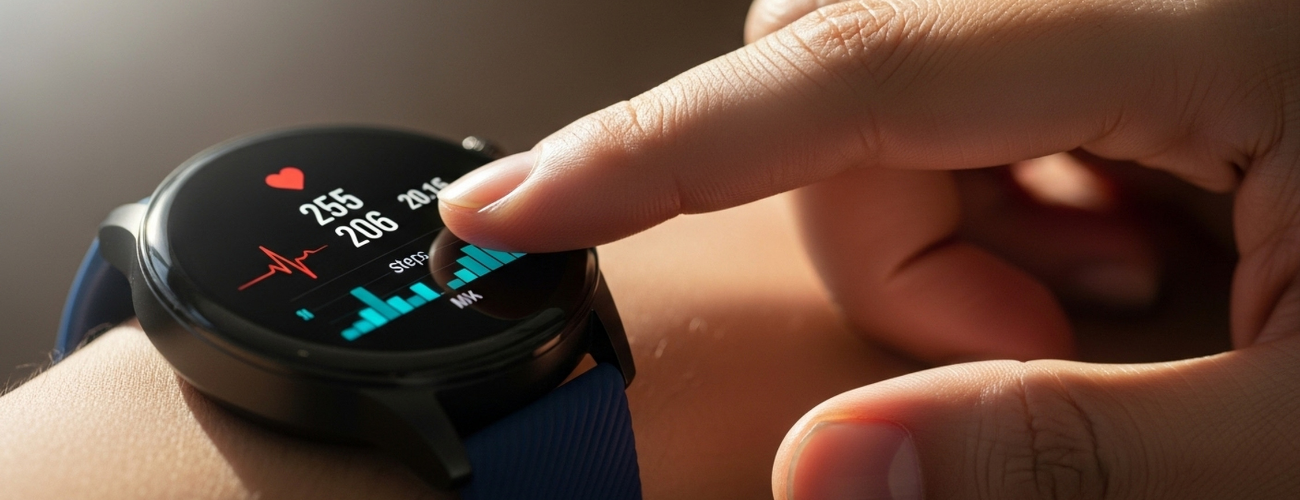
In 2025, the device on your wrist has evolved from a simple pedometer into a sophisticated medical partner. The modern smartwatch is no longer just a luxury accessory for fitness enthusiasts; it is a clinical-grade tool capable of performing real time health monitoring with surgical precision. By leveraging AI-enhanced wearables, we are entering an era where our devices don’t just record data they interpret it. This shift toward proactive healthcare means that your smartwatch can now identify subtle physiological shifts that once required a hospital visit, effectively acting as a clinician that never sleeps.
The Health Academy: Your Expert Guide to Clinical-Grade Wearables
This article on the transformation of wearable devices into clinical partners is brought to you by The Health Academy, a trusted digital hub dedicated to empowering individuals with credible, evidence-based health knowledge. Recognising that the future of proactive healthcare depends on the synergy between advanced medical sensors and intelligent data interpretation, our mission is to provide the authoritative resources needed to understand complex innovations like Digital Cognitive health advisors, AI-enhanced wearables, and on-device intelligence. We bring together a community of health enthusiasts, professionals, and curious readers who seek to understand and improve their wellbeing, ensuring that the information on real-time health monitoring, predictive analytics, and early disease detection is always accurate and reliable.
How AI is Transforming Wearables into Health Advisors
The integration of machine learning into the smartwatch ecosystem has fundamentally changed the user experience. Instead of receiving a notification about your step count, your device now provides medical decision support by analysing your unique biological trends. These AI-enhanced wearables function as “health advisors” that understand the context of your data, distinguishing between the high heart rate of a morning jog and the dangerous spikes associated with a cardiac event.
Understanding the Concept of a Clinician-Like Smartwatch
A “clinician-like” Wearable Health Monitor is one that utilises health algorithms to perform symptom prediction. Just as a doctor looks at your medical history to make a diagnosis, your device uses predictive analytics to compare your current vitals against months of baseline data. This allows the smartwatch to offer insights that go beyond simple tracking, providing a level of personalised health advice that was previously only available through in-person consultations.
On-Device Intelligence: How Local AI Models Respect Your Privacy.
One of the most significant breakthroughs in the future of wearable tech is on device ai. By processing sensitive health information locally on the AI-Enhanced Wearable rather than sending it to the cloud, manufacturers are ensuring biometric security.
- Edge Computing: Data is processed directly on the hardware.
- Reduced Latency: Faster health data analytics without needing a web connection.
- Privacy First: Your most private physiological signals stay on your wrist.
Early Disease Detection Through Continuous Monitoring
The power of early intervention cannot be overstated. By using a Medical-Grade Wearable for continuous health monitoring, users can catch life-threatening conditions in their earliest, most treatable stages. This transition from reactive “sick care” to preventive health is the cornerstone of the modern medical revolution.
Digital Biomarkers: Your Watch as a Health Interpreter
Every heartbeat and breath generates digital biomarkers objective data points that reflect your internal health. Your Wearable Health Monitor acts as an interpreter for these markers, using machine learning to translate raw sensor data into a clear picture of your cardiovascular health.
Pattern Recognition: Identifying Chronic Conditions Before Symptoms Show.
Through pattern recognition, AI-enhanced wearables can spot the microscopic changes in your physiological signals that precede illness. For example, an AI-Enhanced Wearable might notice:
- Subtle Spikes: A gradual increase in resting heart rate over 48 hours.
- Respiratory Declines: A multi-day dip in your blood oxygen spo2.
- Fever Prediction: Changes in skin temperature before you feel warm to the touch.
Heart Rate Variability (HRV) and What It Reveals About You
Heart rate variability (hrv) has emerged as one of the most vital metrics in proactive healthcare. A Medical-Grade Wearable that tracks HRV provides a real-time window into your autonomic nervous system. High heart rate variability typically indicates a resilient, well-recovered body, while low hrv can be an early warning of overtraining, extreme stress, or an oncoming fever.
Detecting the Silent Signs: Predicting Hypertension and Stroke.
Hypertension is often called the “silent killer” because it rarely shows symptoms until it’s too late. Modern Wearable Health Monitor technology now includes blood pressure monitoring capabilities that use health data analytics to track trends over time. By combining this with ecg analysis ai, wearables can flag the irregular rhythms that lead to strokes, providing a critical safety net for those at risk.
Beyond Physical Health: How AI Detects Burnout and Stress Patterns.
Modern wearables are expanding into mental health tracking. By monitoring physiological signals like skin temperature and heart rate variability, an AI-Enhanced Wearable can identify the biological markers of chronic stress. This allows for early intervention in mental health, nudging users to practice mindfulness or rest before stress turns into clinical burnout.
The End of Raw Data: How AI Turns Numbers into Actionable Advice.
In the past, fitness trackers gave users “raw data” that was difficult to understand. Today, the smartwatch uses health algorithms to turn those numbers into advice.
- Contextual Awareness: The device knows if you are sleeping, working, or exercising.
- Actionable Insights: Instead of just a number, you get a suggestion (e.g., “Time for a guided breathing session“).
- Bridge to Clinical Care: Data is presented in a way that is useful for medical decision support.
Virtual Health Coaches: Personalised Motivation Based on Biology.
Digital health platforms now feature virtual coaches that live on your AI-Enhanced Wearable. These coaches use predictive analytics to suggest the best time for a workout or a nap based on your sleep tracking and recovery scores. This is a personalised health plan that evolves with your body’s needs.
Personalised Medicine: Tailoring Your Diet and Exercise via Bio-Feedback.
By using real time health monitoring, your smartwatch provides immediate bio-feedback. If you eat a meal that causes a spike in your stress markers or disrupts your sleep tracking, the device notes the correlation. This level of personalised health allows users to fine-tune their diet and exercise routines with scientific precision.
The “Concierge” Experience: Having a 24/7 Health Assistant.
The modern smartwatch offers a “concierge” experience, providing a 24/7 connection to your vitals. Whether it’s tracking blood oxygen spo2 during a hike or monitoring your cardiovascular health during a meeting, the device ensures that you are never alone.
Smart Alerts: Knowing When a "Nudge" is Actually a Medical Emergency.
One of the most critical functions of an AI-Enhanced Wearable is distinguishing between a routine notification and a medical emergency. Through ecg analysis ai, devices can detect Atrial Fibrillation (Afib) and send “Smart Alerts” that prompt immediate action. These alerts are backed by medical decision support, ensuring that users know exactly when to call a doctor.
The Smartwatch as a First-Line Screening Tool.
As health monitors become more accurate, the Medical-Grade Wearable is becoming a respected first-line screening tool in the medical community. Doctors are increasingly using data from wearables smartwatch devices to supplement clinical tests, allowing for a more comprehensive understanding of a patient’s preventive health status outside the office.
Data Sovereignty: Who Owns the "Clinician’s" Observations?
As we rely more on personal health ai, the question of data privacy and security becomes paramount.
- User Ownership: You should have full control over your health records.
- Consent-Based Sharing: Only sharing digital health platforms data with doctors you trust.
Encrypted Storage: Protecting your biometric security from unauthorised access.
Vision 2030: When Your Watch and Doctor Become One Team.
By 2030, the line between your AI-Enhanced Wearable and your doctor’s office will blur. We will see a future where predictive analytics from your wrist are seamlessly integrated into your medical records, allowing for a truly proactive healthcare system. In this future, the smartwatch won’t just track your life it will help save it.
FAQs
How accurate is a smartwatch for medical-grade health monitoring?
Modern high-end devices now utilise FDA-cleared health sensors that provide clinical-grade accuracy for metrics like ECG and blood oxygen spo2. While these wearables are not meant to replace a professional diagnosis, the real time health monitoring they provide is an essential tool for early intervention. They serve as a powerful secondary screening layer that tracks health trends that a single hospital visit might miss.
Can my smartwatch really detect a stroke or heart attack before it happens?
A smartwatch cannot predict a sudden heart attack with 100% certainty, but it uses ecg analysis ai and predictive analytics to identify dangerous irregular rhythms like Afib. By flagging these cardiovascular health risks and alerting you to spikes in blood pressure monitoring data, the device provides early intervention opportunities. These alerts encourage users to seek medical attention before a minor irregularity turns into a major medical emergency.
Does a smartwatch track mental health as well as physical health?
Yes, current wearables use heart rate variability and skin temperature to monitor the state of your autonomic nervous system. By analysing these physiological signals, the smartwatch can detect patterns associated with chronic stress and provide mental health tracking insights. This allows for proactive healthcare by suggesting mindfulness or rest when the device detects your body is entering a state of high physiological strain.
Is my personal health data safe on these digital health platforms?
Security is a primary focus for the future of wearable tech, with many brands now utilising on device ai to keep processing local. This ensures that your sensitive biometric security data is encrypted and often never leaves the smartwatch unless you choose to share it. You should always review the privacy settings of your digital health platforms to ensure you maintain full data sovereignty over your vitals.
What are digital biomarkers and why should I care about them?
Digital biomarkers are objective, quantifiable data points like your respiratory rate or sleep stages collected via health monitors. Your smartwatch uses machine learning to interpret these biomarkers, turning them into predictive analytics that can flag illness before symptoms appear. Understanding these markers is key to preventive health, as it allows you to make lifestyle adjustments based on what is happening inside your body in real time.
Refrences
https://www.ariia.org.au/knowledge-implementation-hub/technology-in-aged-care/types-technology-aged-care/wearable-technology
https://www.ariia.org.au/knowledge-implementation-hub/technology-in-aged-care/types-technology-aged-care/wearable-technology