
When Healthy Isn’t So Healthy
You’ve made conscious swaps: ditching soda for a morning smoothie, choosing “whole grain” cereal over white bread, and grabbing a protein bar instead of a candy bar. So why are your health and weight loss goals stalled?
The truth is that many “healthy” foods are silently loaded with hidden sugars that actively derail your progress. What looks like a nutritious choice can actually cause a dramatic blood sugar spike and fuel intense cravings, locking you in a continuous cycle of hunger and fatigue.
Let’s unpack the hidden sugar trap and learn how to escape it through smart label reading and conscious choices.
1st The Problem: Sugar Hiding in Plain Sight
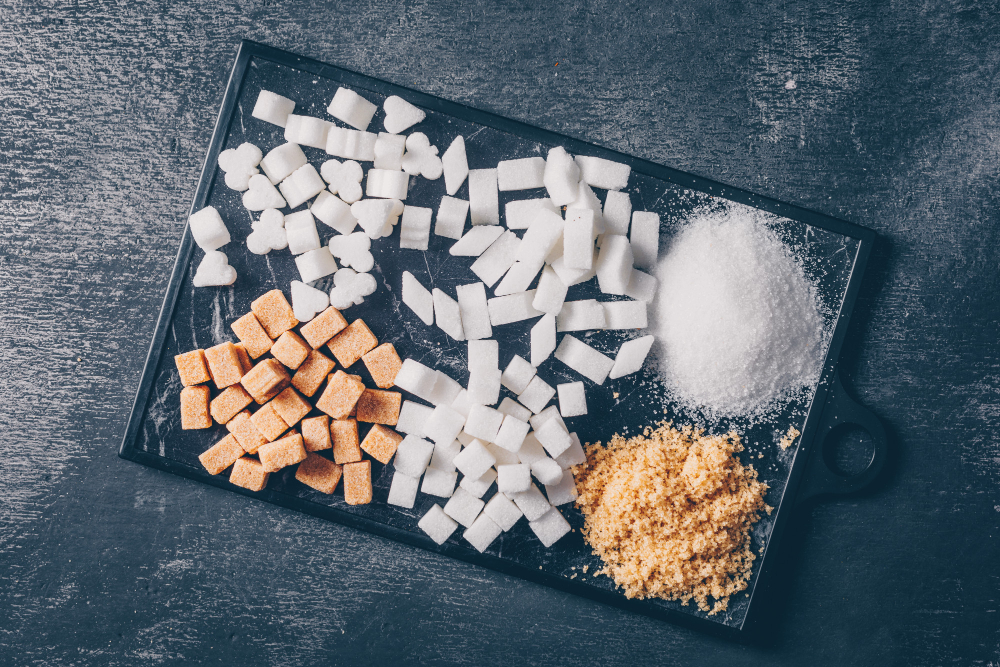
Sugar isn’t just in cake and ice cream. Food manufacturers use dozens of aliases to keep the sweet taste consumers crave while marketing products as healthier options like “low fat,” “natural,” or “organic.”
The Aliases of Added Sugar
You must read labels carefully to spot these common culprits, all of which are forms of added sugar:
- Anything ending in -ose (like fructose, dextrose, or maltose)
- Syrups (Glucose syrup, high-fructose corn syrup, rice malt)
- Concentrates (Fruit concentrate, fruit juice concentrate)
- Nectar and juice alternatives (Agave nectar, evaporated cane juice)
For example, a small cup of supposedly healthy flavored yogurt can contain up to 6 teaspoons of added sugar, equivalent to a glazed doughnut.
2nd The Culprits: Everyday Foods That Secretly Add Up
The sneaky nature of hidden sugars means they lurk in foods you consume daily, often leading you to think they are beneficial. Many common “healthy” culprits are sugar traps: Flavored Yogurt is packed with high amounts of syrup or fruit concentrate (pure sugar), a much healthier choice being Plain Greek yogurt with fresh berries and a drizzle of honey. Similarly, Breakfast Cereals and Granola, even “high fiber” brands, can contain $20\text{g}$ or more of added sugar per serving, making rolled oats with nuts, seeds, and cinnamon a better swap.
Protein Bars frequently include multiple forms of syrup and chocolate coatings, so choose whole nuts and seeds or a bar with less sugar per serving instead.
Smoothies and Juices are a trap because large portions mean the natural fructose from fruit adds up rapidly without the balancing fiber; try to eat whole fruit or make small, vegetable-heavy smoothies. Finally, many Salad Dressings and Sauces (like honey mustard, teriyaki, or barbecue) rely heavily on glucose syrup or high sugar content for flavor, which is why olive oil and vinegar or a simple homemade vinaigrette are the ideal alternatives.
These sugary foods don’t just add empty calories; they set the stage for harmful blood sugar spikes and the subsequent crash, leading to fatigue and an increased likelihood of overeating.
3rd The Science: Why Sugar Leads to Insulin Resistance and Fat Accumulation
When you consume excessive amounts of sugar, your pancreas releases a surge of insulin to manage the high blood glucose. Over time, your cells stop responding efficiently to insulin, leading to insulin resistance, a key driver of Type 2 diabetes.
This constant high sugar intake causes several detrimental health effects:
- Fat Accumulation: Excess sugar is converted and stored as fat, particularly around the abdomen (abdomen’s fat).
- Increased Inflammation: High sugar intake promotes increased inflammation throughout the body, which is linked to heart disease and chronic fatigue.
- Reinforced Cravings: Sugar triggers the brain’s reward system, reinforcing the cycle: the more sugar you eat, the more you want.
4th The Solution: How to Outsmart Hidden Sugars
Empower yourself by becoming a food detective. You can take control of your diet by implementing these steps:
- Read Labels Carefully: Prioritise checking the Added Sugars line on the nutrition panel.
- Check out the Order of Ingredients: Ingredients are listed by weight; if any sugar alias (like maltose or glucose syrup) is near the top, the product is sugar heavy.
- Choose Whole Over Processed: Stick to single-ingredient foods, whole fruits, vegetables, and grains. The natural fructose in whole fruit is balanced by fiber.
Know the Benchmark: Aim for products with less than 5g of sugar per 100g for genuinely low-sugar choices.
5th The Mindset: Progress, Not Perfection
You don’t need to quit sugar completely, but awareness is everything. When you cut back on added sugars, your taste buds recalibrate within weeks, and natural sweetness becomes satisfying again. It’s not deprivation; it’s dietary clarity.
FAQs
What is the difference between “natural” sugar and hidden sugars?
Natural sugars (like fructose in whole apples) are bound by fiber and nutrients, slowing absorption. Hidden sugars (or added sugars, like maltose in a cereal bar) are refined, providing empty calories that lead to a sharp blood sugar spike.
How can a low fat product contain high sugar?
When food manufacturers remove fat to create a “low fat” product, they often add large amounts of sugar to replace the lost flavor and improve the texture. This swap can be worse for metabolic health.
What is Insulin resistance?
Insulin resistance is a condition where your body’s cells stop responding effectively to the insulin released to manage blood sugar. This leaves excess glucose in the bloodstream, contributing to weight gain, abdomen fat storage, and eventually, Type 2 diabetes.
Which “healthy” packaged foods should I check first for added sugar?
Always check flavored yogurt, cereal/granola, and protein bars. Also be vigilant with seemingly savoury items like breads, ketchup, and salad dressings and sauces.
How does sugar cause increased inflammation?
Excessive sugar intake triggers the release of pro-inflammatory messengers in the body, leading to chronic low-level increased inflammation. This state contributes to many chronic diseases, including heart issues and chronic fatigue.
Hidden sugars are everywhere, but with a little label-savvy and mindful eating, you can take control of your diet and energy levels. The Health Academy believes that understanding your food is the first step toward owning your health. It’s not about restriction; it’s about education. Because when you know what’s really on your plate, you can finally make choices that serve your body, not sabotage it.
Final Takeaway
References
1. World Health Organisation (WHO). (2023). Guideline: Sugars intake for adults and children. Retrieved from https://www.who.int/publications/i/item/9789241549028
2. Harvard T.H. Chan School of Public Health. (2023). Added Sugar. Retrieved from https://www.hsph.harvard.edu/nutritionsource/added-sugar/
3. Mayo Clinic. (2023). Artificial sweeteners and other sugar substitutes. Retrieved from https://www.mayoclinic.org/healthy-lifestyle/nutrition-and-healthy-eating/in-depth/artificial-sweeteners/art-20046936